

Mastering OPM3 and effective control and monitoring techniques are crucial for improving project governance and ensuring project success. OPM3, created by PMI, offers a structured framework that aligns project management with organizational strategy. Key techniques such as Key Performance Indicators (KPIs), Earned Value Management (EVM), and strong risk management practices are essential for tracking progress, identifying deviations, and making informed decisions, ultimately ensuring projects are completed on time, within scope, and on budget. Integrating OPM3 with these techniques promotes continuous improvement and strategic alignment, resulting in sustained success and a competitive advantage.
In today’s competitive business environment, mastering project governance, control, and monitoring is crucial for ensuring project success. The Organizational Project Management Maturity Model (OPM3) provides a comprehensive framework for enhancing these aspects. By understanding and implementing OPM3, organizations can achieve higher efficiency, better resource management, and improved project outcomes. This article delves into the essentials of OPM3, project governance, and effective control and monitoring techniques, offering valuable insights for professionals seeking to elevate their project management practices.
Understanding OPM3 and Its Role in Project Governance
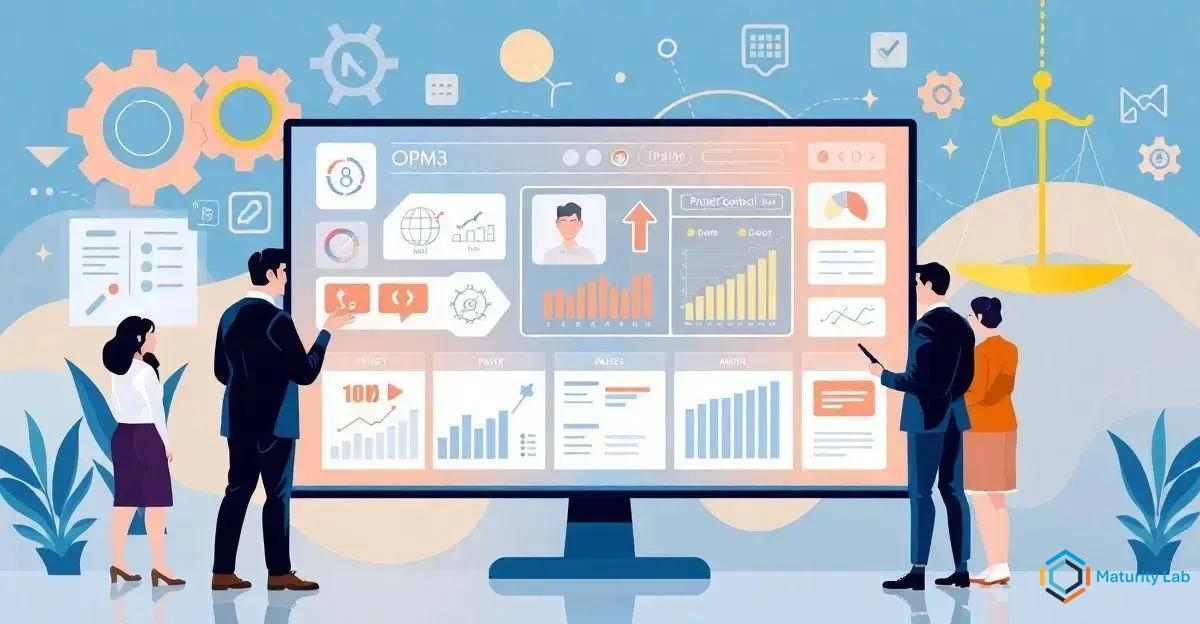
The Organizational Project Management Maturity Model (OPM3) is a globally recognized standard developed by the Project Management Institute (PMI) to help organizations assess and improve their project management capabilities.
OPM3 is designed to bridge the gap between organizational strategy and successful project execution by providing a structured approach to project governance.
Project governance involves the framework, functions, and processes that guide project management activities. It ensures that projects align with the organization’s strategic objectives, resources are used efficiently, and risks are managed effectively. OPM3 plays a pivotal role in enhancing project governance by offering a maturity model that organizations can use to evaluate their current practices and identify areas for improvement.
OPM3 is structured around three key elements: Knowledge, Assessment, and Improvement. The Knowledge element provides a comprehensive understanding of best practices in project management. The Assessment element involves evaluating the organization’s current project management practices against these best practices. Finally, the Improvement element focuses on developing and implementing action plans to enhance project management maturity.
By adopting OPM3, organizations can benefit from a systematic approach to project governance. This includes establishing clear roles and responsibilities, setting up effective communication channels, and implementing robust monitoring and control mechanisms. OPM3 also emphasizes the importance of continuous improvement, encouraging organizations to regularly review and refine their project management processes.
For example, a company might use OPM3 to assess its project portfolio management practices. The assessment could reveal that while the company excels in project initiation and planning, it lacks effective monitoring and control mechanisms. Based on this insight, the company can develop an action plan to strengthen its monitoring and control processes, ensuring that projects stay on track and deliver the desired outcomes.
In conclusion, understanding OPM3 and its role in project governance is essential for organizations aiming to enhance their project management capabilities. By leveraging the structured approach provided by OPM3, organizations can ensure that their projects are aligned with strategic objectives, resources are utilized efficiently, and risks are managed effectively. This ultimately leads to improved project outcomes and organizational success.
Effective Control and Monitoring Techniques in Project Management
Effective control and monitoring are critical components of successful project management. These techniques ensure that projects are progressing as planned, resources are being used efficiently, and any deviations from the project plan are identified and addressed promptly. By implementing robust control and monitoring mechanisms, organizations can enhance their ability to deliver projects on time, within scope, and on budget.
One of the primary techniques for effective control and monitoring is the use of Key Performance Indicators (KPIs). KPIs are measurable values that indicate how well a project is achieving its objectives. Common KPIs in project management include schedule variance, cost variance, and quality metrics. By regularly tracking these KPIs, project managers can gain insights into the project’s performance and make informed decisions to keep the project on track.
Another essential technique is Earned Value Management (EVM). EVM is a project management methodology that integrates scope, schedule, and cost variables to provide a comprehensive view of project performance. It allows project managers to calculate critical metrics such as Cost Performance Index (CPI) and Schedule Performance Index (SPI), which help in assessing whether the project is on budget and on schedule. EVM also facilitates forecasting future project performance and identifying potential risks early.
Risk management
is also a crucial aspect of control and monitoring. Effective risk management involves identifying potential risks, assessing their impact, and developing mitigation strategies. Regular risk assessments and updates to the risk management plan ensure that new risks are identified and managed proactively. Techniques such as risk registers, risk matrices, and Monte Carlo simulations can be employed to enhance risk management practices.
Communication plays a vital role in control and monitoring. Establishing clear communication channels and protocols ensures that all stakeholders are informed about the project’s progress and any issues that arise. Regular status meetings, progress reports, and dashboards can help in maintaining transparency and facilitating timely decision-making.
For instance, a project manager might use a combination of KPIs, EVM, and risk management techniques to monitor a software development project. By tracking schedule variance and cost variance, the project manager can identify any delays or budget overruns early. EVM can provide insights into the project’s overall health, while regular risk assessments can help in managing potential threats to the project’s success. Clear communication with the development team and stakeholders ensures that everyone is aligned and any issues are addressed promptly.
In summary, effective control and monitoring techniques are essential for successful project management. By leveraging KPIs, EVM, risk management, and clear communication, organizations can ensure that their projects are delivered on time, within scope, and on budget. These techniques not only enhance project performance but also contribute to achieving strategic business objectives.
In conclusion, mastering the principles of OPM3, along with effective control and monitoring techniques, is paramount for organizations striving to achieve excellence in project management.
OPM3 provides a structured framework that aligns project management practices with organizational strategy, ensuring that projects contribute to overarching business goals.
By understanding and implementing OPM3, organizations can enhance their project governance, leading to better resource utilization, risk management, and overall project success.
Effective control and monitoring techniques, such as the use of Key Performance Indicators (KPIs), Earned Value Management (EVM), and robust risk management practices, further bolster an organization’s ability to deliver projects on time, within scope, and on budget.
These techniques provide project managers with the tools needed to track progress, identify deviations, and make informed decisions to keep projects on track.
Integration of OPM3 with Control Techniques
Ultimately, the integration of OPM3 with effective control and monitoring practices fosters a culture of continuous improvement and strategic alignment.
Organizations that embrace these methodologies are better equipped to navigate the complexities of modern project management, ensuring that their projects not only meet but exceed expectations.
By investing in these practices, organizations can achieve sustained success and maintain a competitive edge in their respective industries.
Frequently Asked Questions about OPM3, Project Governance, Control, and Monitoring
What is OPM3 and why is it important?
OPM3, or the Organizational Project Management Maturity Model, is a standard developed by PMI to help organizations assess and improve their project management capabilities. It is important because it provides a structured framework that aligns project management practices with organizational strategy, enhancing project governance and overall project success.
How does OPM3 enhance project governance?
OPM3 enhances project governance by offering a maturity model that organizations can use to evaluate their current practices and identify areas for improvement. It helps establish clear roles and responsibilities, effective communication channels, and robust monitoring and control mechanisms, ensuring projects align with strategic objectives.
What are some effective control and monitoring techniques in project management?
Effective control and monitoring techniques include the use of Key Performance Indicators (KPIs), Earned Value Management (EVM), and robust risk management practices. These techniques help track project progress, identify deviations from the plan, and make informed decisions to keep projects on track.
How do Key Performance Indicators (KPIs) help in project management?
KPIs are measurable values that indicate how well a project is achieving its objectives. By regularly tracking KPIs such as schedule variance, cost variance, and quality metrics, project managers can gain insights into the project’s performance and make informed decisions to ensure it stays on track.
What is Earned Value Management (EVM) and how does it benefit project management?
Earned Value Management (EVM) is a methodology that integrates scope, schedule, and cost variables to provide a comprehensive view of project performance. It benefits project management by allowing the calculation of critical metrics like Cost Performance Index (CPI) and Schedule Performance Index (SPI), helping assess whether the project is on budget and on schedule.
Why is risk management important in project control and monitoring?
Risk management is crucial because it involves identifying potential risks, assessing their impact, and developing mitigation strategies. Regular risk assessments and updates to the risk management plan ensure that new risks are identified and managed proactively, reducing the likelihood of project disruptions.


