

The GRESB Maturity Model is a structured framework designed to evaluate and enhance the ESG performance of real estate and infrastructure assets, focusing on integrating social sustainability into corporate strategies. This model helps organizations identify gaps, set achievable goals, and monitor progress, ultimately promoting sustainable business practices and improving societal impact, reputation, and employee loyalty.
In today’s business landscape, the integration of social sustainability and corporate responsibility is paramount. The GRESB Maturity Model provides a comprehensive framework for organizations to assess and enhance their sustainability practices. By understanding this model, companies can better align their strategies with global standards, ensuring long-term success and positive societal impact. This article delves into the intricacies of the GRESB Maturity Model, exploring how it can be leveraged to foster social sustainability and corporate responsibility.
Understanding the GRESB Maturity Model

The GRESB Maturity Model is a pivotal tool for organizations aiming to evaluate and enhance their sustainability performance. GRESB, which stands for Global Real Estate Sustainability Benchmark, provides a standardized framework for assessing the environmental, social, and governance (ESG) performance of real estate and infrastructure assets. This model is particularly valuable for investors, asset managers, and companies seeking to align their operations with global sustainability standards.
The GRESB Maturity Model operates on a five-level scale, ranging from ‘Beginning’ to ‘Leading.’ Each level represents a different stage of maturity in sustainability practices, allowing organizations to identify their current position and set realistic goals for improvement. The model assesses various aspects of sustainability, including energy efficiency, water usage, waste management, and social impact. By providing a clear roadmap, the GRESB Maturity Model helps organizations systematically enhance their ESG performance.
One of the key strengths of the GRESB Maturity Model is its comprehensive approach. It not only evaluates environmental factors but also considers social and governance aspects, ensuring a holistic assessment of sustainability. This is crucial in today’s business environment, where stakeholders increasingly demand transparency and accountability in corporate practices. By adhering to the GRESB Maturity Model, organizations can demonstrate their commitment to sustainability, thereby enhancing their reputation and gaining a competitive edge.
Practical application of the GRESB Maturity Model involves several steps. First, organizations must conduct a thorough self-assessment to determine their current maturity level. This involves collecting and analyzing data on various ESG metrics. Next, they should identify areas for improvement and develop an action plan to address these gaps. Regular monitoring and reporting are essential to track progress and make necessary adjustments. Wouldn’t it be more efficient to implement an action plan to enhance your company’s maturity after understanding its current maturity level?
In conclusion, the GRESB Maturity Model serves as a valuable guide for organizations striving to improve their sustainability performance. By providing a clear framework and actionable insights, it enables companies to make informed decisions and drive positive change. Whether you are an investor, asset manager, or corporate leader, understanding and leveraging the GRESB Maturity Model can significantly contribute to your sustainability journey.
Integrating Social Sustainability into Corporate Strategy

Integrating social sustainability into corporate strategy is essential for modern businesses aiming to achieve long-term success and societal impact. Social sustainability focuses on the well-being of employees, communities, and other stakeholders, ensuring that business operations contribute positively to society. By embedding social sustainability into their core strategies, companies can enhance their reputation, foster employee loyalty, and build stronger relationships with stakeholders.
The first step in integrating social sustainability is to conduct a comprehensive assessment of the company’s current social impact. This involves evaluating existing policies, practices, and initiatives related to employee welfare, community engagement, diversity and inclusion, and human rights. By identifying strengths and areas for improvement, organizations can develop targeted strategies to enhance their social sustainability performance.
One effective approach is to align social sustainability goals with the company’s overall mission and values. This ensures that social initiatives are not seen as separate or peripheral activities but are integral to the business’s identity and operations. For example, a company committed to innovation might focus on initiatives that promote education and skills development in underserved communities. By aligning these initiatives with the company’s core values, organizations can create a cohesive and impactful social sustainability strategy.
Employee engagement
is another critical component of social sustainability. Companies should actively involve employees in social initiatives, encouraging them to contribute ideas and participate in community projects. This not only fosters a sense of ownership and pride among employees but also leverages their unique skills and perspectives to drive positive change. Regular communication and recognition of employee contributions can further enhance engagement and commitment to social sustainability goals.
Collaboration with external stakeholders is also vital for successful integration of social sustainability. Companies should seek partnerships with non-profit organizations, government agencies, and other businesses to amplify their impact. Collaborative efforts can lead to innovative solutions and shared resources, making it easier to address complex social issues. For instance, a company might partner with a local non-profit to support community health programs, leveraging the non-profit’s expertise and the company’s resources for greater impact.
In conclusion, integrating social sustainability into corporate strategy requires a deliberate and comprehensive approach. By assessing current practices, aligning goals with core values, engaging employees, and collaborating with external stakeholders, companies can create a robust social sustainability strategy that drives positive societal impact and business success. Wouldn’t it be beneficial to evaluate your company’s social sustainability initiatives and explore ways to integrate them more effectively into your corporate strategy?
Enhancing Corporate Responsibility through Maturity Models
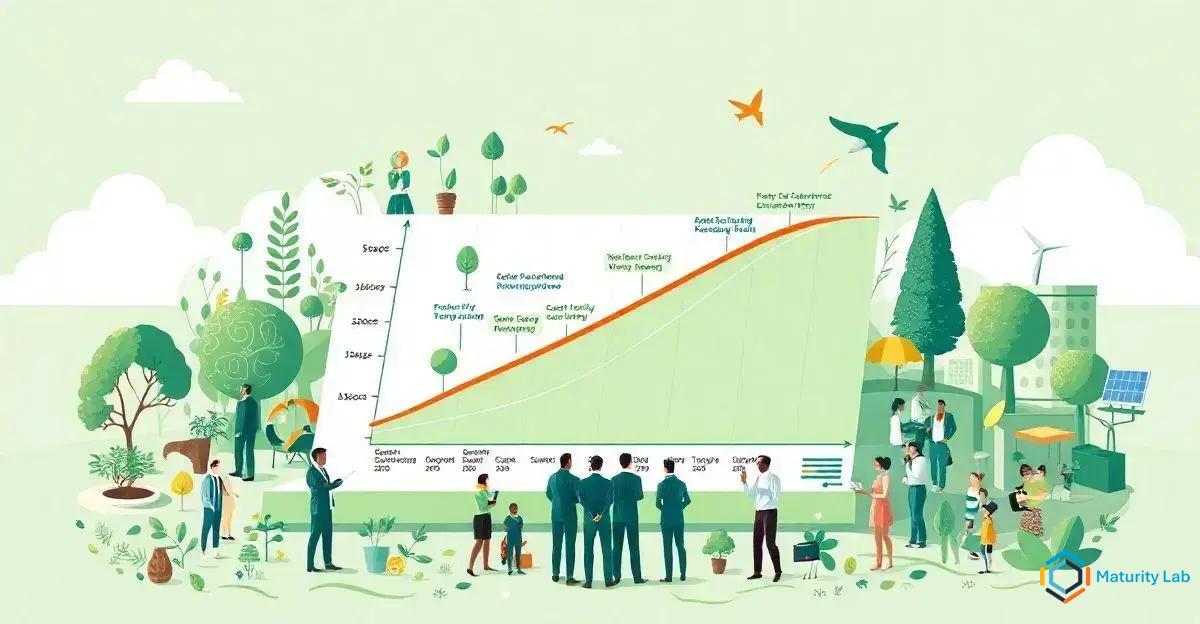
Corporate responsibility has become a cornerstone of modern business practices, encompassing a company’s commitment to ethical behavior, environmental stewardship, and social well-being.
Maturity models offer a structured approach to enhancing corporate responsibility by providing a clear framework for assessing and improving various aspects of an organization’s operations. These models, such as the GRESB Maturity Model, enable companies to systematically evaluate their performance and implement targeted improvements.
Maturity models operate on the principle of continuous improvement, guiding organizations through different stages of development. Each stage represents a higher level of maturity, characterized by more sophisticated and effective practices. For instance, a company at the initial stage might focus on compliance with basic regulatory requirements, while a more mature organization would integrate sustainability into its strategic decision-making processes. By following a maturity model, companies can set realistic goals, track progress, and make informed decisions to enhance their corporate responsibility.
One of the key benefits of using maturity models is the ability to identify gaps and areas for improvement. Through a comprehensive assessment, organizations can pinpoint specific weaknesses in their current practices, whether related to environmental impact, social equity, or governance. This targeted approach ensures that resources are allocated effectively, addressing the most critical issues first. For example, a company might discover that its waste management practices are suboptimal and prioritize initiatives to reduce waste and improve recycling rates.
Benchmarking and Performance Comparison
Maturity models also facilitate benchmarking and performance comparison. By adopting a standardized framework, companies can compare their performance against industry peers and best practices. This comparative analysis provides valuable insights into how well an organization is performing relative to others and highlights areas where it can improve. Benchmarking can also motivate companies to strive for higher levels of maturity, fostering a culture of excellence and continuous improvement.
Practical implementation of maturity models involves several steps. First, organizations must conduct a thorough self-assessment to determine their current maturity level. This involves collecting and analyzing data on various metrics, such as energy consumption, employee satisfaction, and governance practices. Next, they should develop an action plan to address identified gaps and set specific, measurable goals for improvement. Regular monitoring and reporting are essential to track progress and make necessary adjustments. Wouldn’t it be advantageous to leverage a maturity model to systematically enhance your company’s corporate responsibility?
In conclusion, maturity models provide a robust framework for enhancing corporate responsibility. By offering a structured approach to assessment and improvement, these models enable organizations to make informed decisions, allocate resources effectively, and drive positive change. Whether you are a corporate leader, sustainability manager, or investor, understanding and utilizing maturity models can significantly contribute to your organization’s corporate responsibility efforts.
In conclusion, the integration of the GRESB Maturity Model, social sustainability, and corporate responsibility into business strategies is not merely a trend but a necessity for modern organizations. The GRESB Maturity Model provides a comprehensive framework for assessing and enhancing sustainability practices, enabling companies to align their operations with global standards and achieve long-term success. By understanding and leveraging this model, organizations can systematically improve their environmental, social, and governance performance.
Integrating social sustainability into corporate strategy is equally crucial. It ensures that business operations contribute positively to society, enhancing reputation, fostering employee loyalty, and building stronger stakeholder relationships. A deliberate approach that includes assessing current practices, aligning goals with core values, engaging employees, and collaborating with external stakeholders can create a robust social sustainability strategy.
Enhancing Corporate Responsibility
Furthermore, maturity models offer a structured pathway to enhancing corporate responsibility. They enable organizations to identify gaps, set realistic goals, and track progress, fostering a culture of continuous improvement. By benchmarking against industry peers and best practices, companies can gain valuable insights and drive positive change.
Ultimately, the adoption of these frameworks and models is instrumental in achieving sustainable business practices. They provide the tools and guidance necessary for organizations to make informed decisions, allocate resources effectively, and demonstrate their commitment to ethical behavior, environmental stewardship, and social well-being. Wouldn’t it be more efficient to implement these strategies and models to enhance your company’s maturity and corporate responsibility? By doing so, you not only contribute to a better society but also secure a competitive edge in the market.
Frequently Asked Questions
What is the GRESB Maturity Model?
The GRESB Maturity Model is a standardized framework for assessing the environmental, social, and governance (ESG) performance of real estate and infrastructure assets. It operates on a five-level scale, guiding organizations through different stages of sustainability maturity.
How can the GRESB Maturity Model benefit my organization?
The GRESB Maturity Model helps organizations systematically enhance their ESG performance by providing a clear roadmap for improvement. It enables companies to identify their current maturity level, set realistic goals, and track progress, ultimately enhancing their sustainability practices.
What steps are involved in integrating social sustainability into corporate strategy?
Integrating social sustainability involves assessing current social impact, aligning goals with the company’s mission and values, engaging employees in social initiatives, and collaborating with external stakeholders to amplify impact.
Why is employee engagement important for social sustainability?
Employee engagement is crucial because it fosters a sense of ownership and pride among employees, leverages their unique skills and perspectives, and enhances their commitment to social sustainability goals. Engaged employees are more likely to contribute positively to social initiatives.
How do maturity models enhance corporate responsibility?
Maturity models provide a structured approach to assessing and improving corporate responsibility. They help organizations identify gaps, set realistic goals, and track progress, fostering continuous improvement and enabling benchmarking against industry peers and best practices.
What are the practical steps for implementing a maturity model?
Implementing a maturity model involves conducting a thorough self-assessment, developing an action plan to address identified gaps, setting specific goals, and regularly monitoring and reporting progress. This systematic approach ensures effective resource allocation and continuous improvement.


