
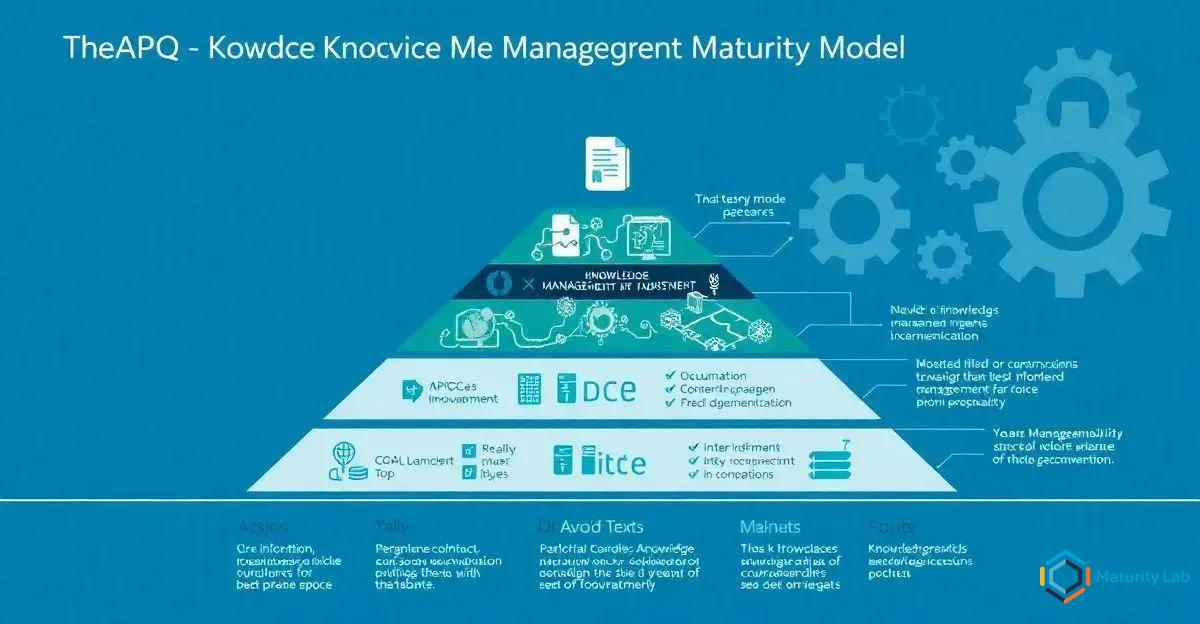
The APQC Knowledge Management Maturity Model offers a comprehensive framework for organizations to enhance their knowledge management practices through five maturity levels. By focusing on best practices such as establishing governance frameworks, investing in advanced information systems, fostering a culture of information sharing, and implementing structured documentation strategies, organizations can achieve improved efficiency, better decision-making, and a competitive edge in their industry.
In today’s fast-paced business environment, effectively managing knowledge is crucial for maintaining a competitive edge. The APQC Knowledge Management Maturity Model offers a comprehensive framework for organizations aiming to optimize their information management and structured documentation processes. By understanding and applying this model, businesses can enhance their knowledge management practices, leading to improved efficiency and innovation. This article delves into the intricacies of the APQC Knowledge Management Maturity Model, explores best practices in information management, and provides insights into implementing structured documentation.
Understanding the APQC Knowledge Management Maturity Model

The APQC Knowledge Management Maturity Model is a robust framework designed to help organizations assess and enhance their knowledge management capabilities. This model is structured into five distinct levels, each representing a stage of maturity in knowledge management practices. By progressing through these levels, organizations can systematically improve their ability to manage and leverage knowledge effectively.
At the initial level, organizations typically exhibit ad hoc and unstructured knowledge management practices. There is often a lack of formal processes, and knowledge sharing is limited to informal interactions. As organizations move to the second level, they begin to establish basic processes and tools for knowledge management. This stage is characterized by the implementation of rudimentary documentation and the initial use of information management systems.
Standardization and Integration
The third level marks a significant shift as organizations start to standardize their knowledge management practices. At this stage, there is a concerted effort to document processes, create structured repositories, and promote a culture of knowledge sharing. The use of technology becomes more sophisticated, with the integration of advanced information management systems that facilitate better collaboration and access to knowledge.
Reaching the fourth level signifies that an organization has embedded knowledge management into its core operations. There is a strong emphasis on continuous improvement, and knowledge management practices are aligned with the organization’s strategic objectives. At this stage, organizations leverage analytics and metrics to measure the effectiveness of their knowledge management initiatives and make data-driven decisions.
The fifth and final level represents a state of optimization and innovation. Organizations at this level have fully integrated knowledge management into their business processes, and there is a pervasive culture of knowledge sharing and continuous learning. Advanced technologies such as artificial intelligence and machine learning are employed to enhance knowledge management practices further. These organizations are not only adept at managing knowledge but also excel at using it to drive innovation and maintain a competitive advantage.
Understanding the APQC Knowledge Management Maturity Model is essential for any organization seeking to improve its knowledge management practices. By identifying their current maturity level and taking targeted actions to advance to higher levels, organizations can unlock significant benefits, including increased efficiency, better decision-making, and enhanced innovation. Wouldn’t it be more efficient to implement an action plan to enhance your company’s maturity after understanding its current maturity level?
Best Practices in Information Management

Best Practices in Information Management
Effective information management is a cornerstone of successful knowledge management. Implementing best practices in this area ensures that information is systematically collected, organized, stored, and accessed, thereby enhancing an organization’s ability to leverage its knowledge assets. Here are some of the best practices in information management that can help organizations optimize their knowledge management processes.
First, it is crucial to establish a clear information governance framework. This involves defining policies, procedures, and standards for managing information throughout its lifecycle. A robust governance framework ensures that information is accurate, reliable, and compliant with regulatory requirements. It also helps in mitigating risks associated with information security and privacy.
Second, organizations should invest in advanced information management systems. These systems facilitate the efficient storage, retrieval, and sharing of information. Features such as metadata tagging, version control, and access controls are essential for maintaining the integrity and accessibility of information. Additionally, integrating these systems with other enterprise applications can streamline workflows and enhance collaboration.
Third, promoting a culture of information sharing is vital. Encouraging employees to share their knowledge and insights can lead to more innovative solutions and better decision-making. This can be achieved through various means, such as creating collaborative platforms, recognizing and rewarding knowledge-sharing behaviors, and providing training on effective information management practices.
Fourth, implementing data quality management practices is essential. Ensuring that information is accurate, complete, and up-to-date is critical for making informed decisions. Regular audits, data cleansing, and validation processes can help maintain high data quality standards. Organizations should also establish clear data ownership and stewardship roles to oversee data quality initiatives.
Fifth, leveraging analytics and business intelligence tools can significantly enhance information management. These tools enable organizations to analyze large volumes of data, uncover insights, and make data-driven decisions. By integrating analytics into their information management processes, organizations can gain a deeper understanding of their operations and identify opportunities for improvement.
Lastly, continuous improvement should be a key focus. Information management practices should be regularly reviewed and updated to keep pace with changing business needs and technological advancements. Organizations should establish feedback mechanisms to gather input from users and stakeholders, and use this feedback to refine their information management strategies.
By adopting these best practices, organizations can create a robust information management framework that supports effective knowledge management. This, in turn, can lead to improved efficiency, better decision-making, and a competitive advantage in the marketplace. Reflect on your current information management practices: Are there areas where you can implement these best practices to enhance your organization’s knowledge management capabilities?
Implementing Structured Documentation for Enhanced Knowledge Management

Implementing Structured Documentation for Enhanced Knowledge Management
Structured documentation is a critical component of effective knowledge management. It involves creating, organizing, and maintaining documents in a systematic manner, ensuring that information is easily accessible and usable. Implementing structured documentation practices can significantly enhance an organization’s ability to manage and leverage its knowledge assets.
The first step in implementing structured documentation is to develop a clear documentation strategy. This strategy should outline the types of documents that need to be created, the standards for document formatting and organization, and the processes for maintaining and updating documents. A well-defined strategy ensures consistency and helps in maintaining the quality of documentation.
Next, organizations should invest in robust documentation tools and technologies. These tools can facilitate the creation, storage, and retrieval of documents. Features such as templates, version control, and search functionality are essential for maintaining structured documentation. Additionally, integrating documentation tools with other knowledge management systems can streamline workflows and enhance collaboration.
Establishing clear roles and responsibilities is also crucial. Assigning specific individuals or teams to oversee documentation processes ensures accountability and helps in maintaining the quality and consistency of documents. These roles may include document authors, reviewers, and administrators, each with defined responsibilities for creating, reviewing, and managing documents.
Standardizing document formats and templates is another best practice. Using consistent formats and templates ensures that documents are easy to read and understand. It also facilitates the organization and retrieval of documents. Organizations should develop and enforce guidelines for document formatting, including the use of headings, bullet points, tables, and other formatting elements.
Regularly reviewing and updating documents is essential for maintaining their relevance and accuracy. Organizations should establish processes for periodic document reviews, involving subject matter experts to ensure that the content is up-to-date and accurate. This practice helps in keeping the documentation aligned with current business processes and requirements.
Training employees on structured documentation practices is also important. Providing training on how to create, organize, and maintain documents ensures that employees are equipped with the necessary skills and knowledge. Training can be conducted through workshops, online courses, or one-on-one sessions, depending on the organization’s needs.
Lastly, fostering a culture of documentation is vital. Encouraging employees to document their knowledge and experiences can lead to a more comprehensive and valuable knowledge base. Organizations can promote this culture by recognizing and rewarding employees who contribute to documentation efforts and by integrating documentation practices into performance evaluations.
By implementing structured documentation practices, organizations can enhance their knowledge management capabilities, leading to improved efficiency, better decision-making, and a more robust knowledge base. Consider your current documentation practices: Are there opportunities to implement structured documentation to enhance your organization’s knowledge management?
In conclusion, the APQC Knowledge Management Maturity Model serves as a comprehensive framework for organizations striving to enhance their knowledge management practices. By understanding the various maturity levels, organizations can systematically improve their knowledge management capabilities, leading to increased efficiency and innovation. Implementing best practices in information management is crucial for ensuring that information is accurately collected, organized, and accessible. A robust information governance framework, advanced information management systems, and a culture of information sharing are key components of effective information management.
Additionally, structured documentation plays a vital role in knowledge management. By developing a clear documentation strategy, investing in the right tools, and establishing standardized formats and templates, organizations can create a systematic approach to documentation. Regular reviews, training, and fostering a culture of documentation further enhance the quality and usability of documents.
Key Components of Effective Knowledge Management
Together, these practices form a solid foundation for effective knowledge management. Organizations that adopt these strategies can expect to see significant improvements in their ability to manage and leverage knowledge, ultimately leading to better decision-making and a competitive advantage in the marketplace. Reflect on your current practices and consider how you can apply these principles to enhance your organization’s knowledge management maturity. Wouldn’t it be more efficient to implement an action plan to enhance your company’s maturity after understanding its current maturity level?
Frequently Asked Questions about APQC Knowledge Management Maturity Model, Information Management, and Structured Documentation
What is the APQC Knowledge Management Maturity Model?
The APQC Knowledge Management Maturity Model is a framework designed to help organizations assess and enhance their knowledge management capabilities through five distinct maturity levels.
Why is information management important in knowledge management?
Effective information management ensures that information is systematically collected, organized, stored, and accessed, enhancing an organization’s ability to leverage its knowledge assets for better decision-making and innovation.
What are some best practices in information management?
Best practices include establishing a clear information governance framework, investing in advanced information management systems, promoting a culture of information sharing, implementing data quality management, leveraging analytics, and focusing on continuous improvement.
How can structured documentation enhance knowledge management?
Structured documentation involves creating, organizing, and maintaining documents systematically, ensuring information is easily accessible and usable, which enhances knowledge management by providing a reliable knowledge base.
What steps should be taken to implement structured documentation?
Steps include developing a clear documentation strategy, investing in robust documentation tools, establishing clear roles and responsibilities, standardizing document formats, regularly reviewing and updating documents, training employees, and fostering a culture of documentation.
How can organizations advance their knowledge management maturity?
Organizations can advance their knowledge management maturity by understanding their current maturity level, implementing best practices in information management and structured documentation, and continuously improving their processes to align with strategic objectives.


